
Luis Enrique Goal Kick Genius or Internet Hype? Here Are the Facts
All over the internet praise for Luis Enrique’s PSG goal kicks vs FC Bayern Munich has exploded. Popular social media accounts, analysis channels and even pundits have been praising Luis Enrique’s goal kicks as a genius ploy to stop Michael Olise and Bayern Munich’s right side.
But was it really all about one player?
We decided to actually go back over the entire game and look at the factual evidence behind PSG’s goal kick tactic vs FC Bayern Munich in the Champions League semi final, to really understand it from a tactical point of view.
But let’s start with the bias around people calling it genius to simply kick the ball out of play.
Because our argument to that would be simple.
What about the footage leading to the Bayern Munich goal?
Does that moment suddenly not count because it does not fit the narrative of calling every out of play kick a moment of genius?
Because if some clips are tactical brilliance, then the clips where PSG lose control from the exact same tactic also have to be part of the conversation.
Just because Olise is Dangerous? We think not!
Next let’s entertain the idea that the only reason PSG were kicking the ball out of play from goal kicks was to ensure there was less space around Michael Olise if Bayern Munich won the first header.
Does that then mean leaving the Luis Diaz side more open in those same moments was somehow less risky?
Again, we refer back to the actual video evidence from the game, which would suggest not.
Because if the tactical priority was purely about stopping Michael Olise isolation moments, then Vincent Kompany could simply counter that by switching the wingers during goal kick phases as the ball travelled.
The clip below shows exactly why that matters.
If PSG overload one side specifically to stop Olise, Bayern can naturally create space elsewhere. In this case, that space often appeared around the Luis Diaz side, which also created dangerous moments for Bayern Munich.
That is why reducing the entire tactic down to “PSG kicked it out to stop Michael Olise” feels far too simplistic when you actually watch the full game back.
So what was it all about then?
There were exactly thirteen PSG goal kicks on the night, and as evidence of that we have clipped and posted every single one of them below.
Of those thirteen, six were kicked directly into touch, with two of those still resulting in contested aerial moments. There were seven other PSG goal kicks. One was played short, while the other six were kicked long into an area or aerial duel.
So the narrative that PSG simply wanted to kick the ball out of play all night from goal kicks is false.
But why did PSG keep aiming for that same area, whether into touch or into an aerial duel nearby?
That is the real tactical question here.
To understand it, we first have to go back to the previous game, where Bayern Munich’s high press caused PSG serious problems. PSG clearly did not want to constantly trigger those aggressive Bayern pressing moments again, so they chose to go long far more often.
But why specifically towards the left PSG side?
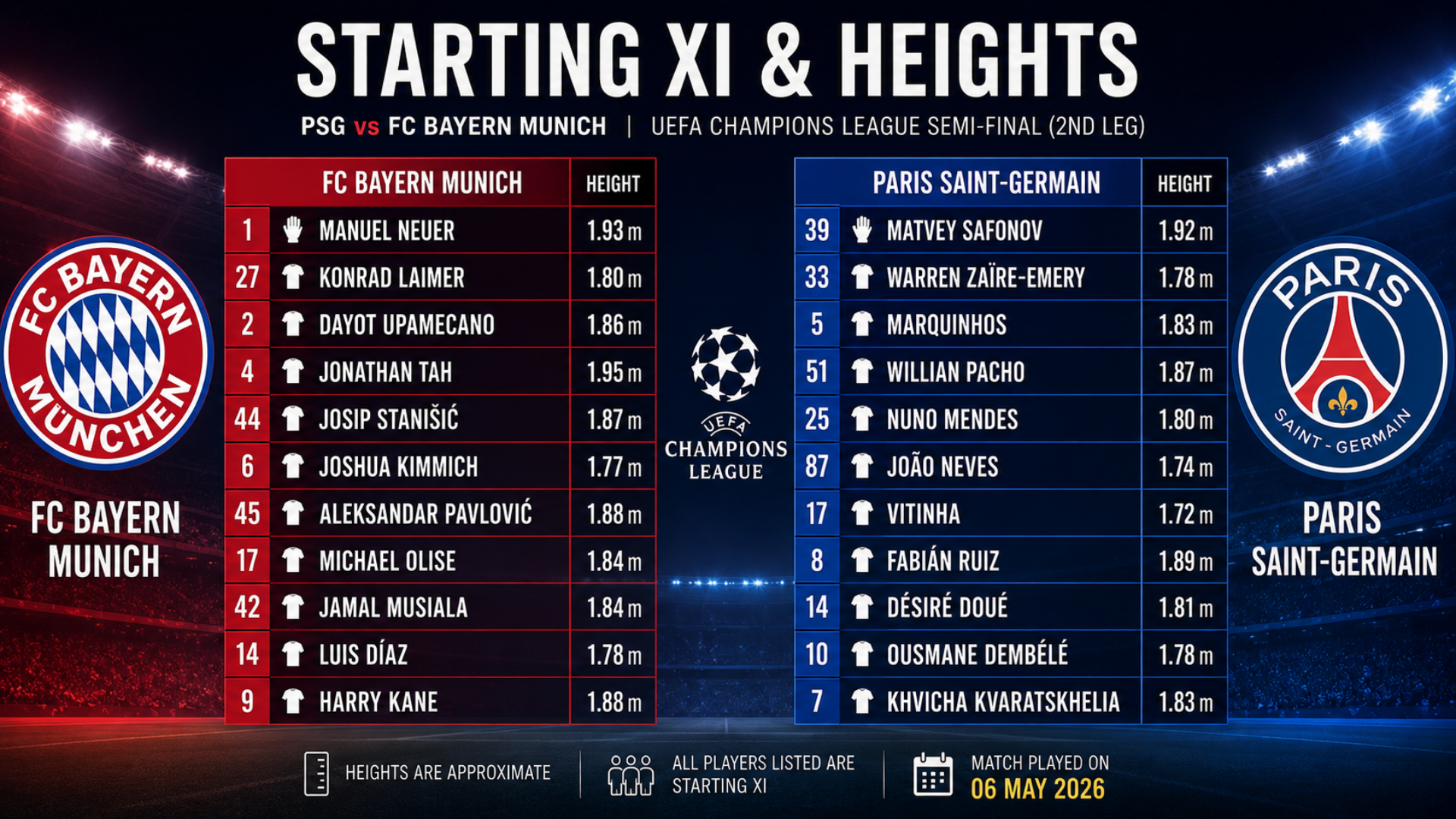
To understand that, let’s first look at the height difference between both starting elevens.
What becomes immediately clear from the image below is that one of the few aerial mismatches PSG actually had in their favour from goal kick situations was the Konrad Laimer vs Khvicha Kvaratskhelia matchup.
At 1.80m, Laimer was regularly competing against Kvaratskhelia at 1.83m, with PSG also often having support arriving around the second ball area.
But that still is not the full reason PSG repeatedly targeted that zone from goal kicks.
More Reasons?
It was clear throughout the game that PSG’s tactical preparation was heavily focused on controlling transitions.
We saw that all night.
One example of it from Bayern Munich corners can be seen in the clip below, where PSG’s positioning and reactions were clearly designed around limiting open transition moments rather than simply defending the first action.
The same logic applied to the goal kicks.
PSG clearly felt that making the spaces tighter with longer goal kicks made it easier for them to counter press if the ball stayed in play. And if the ball went out of play, PSG could quickly set up to invite Bayern Munich into backwards throw ins, allowing PSG to press in a far more controlled manner without inviting dangerous fast transition moments.
That is a very different tactical explanation than simply saying “they wanted to stop Michael Olise”.
Was one advantage of the tactic that Michael Olise had less space if Bayern Munich turned the ball over?
Yes.
But to suggest that was the only reason behind PSG’s goal kicks is simply not factual when you actually focus on the details, footage and evidence from the full match.
The Full Tactical Camera match is available here
All PSG Goal Kicks
Goal Kick 1
Goal Kick 2
Goal Kick 3
Goal Kick 4
Goal Kick 5
Goal Kick 6
Goal Kick 7
Goal Kick 8
Goal Kick 9
Goal Kick 10
Goal Kick 11
Goal Kick 12
Goal Kick 13