
Pep Guardiola Training: Drills, Rondos, Positional Play & Session Ideas
Pep Guardiola Training: How the Best Coach in the World Develops His Teams
What Is Pep Guardiola Training? (The Philosophy Behind His Sessions)
If you watch a Pep Guardiola training session, one thing becomes clear immediately: every practice has a purpose.
Pep Guardiola sessions are designed so players develop technique, awareness, positioning, and decision making and team principles at the same time. Almost every drill includes opponents, limited space, and specific positional rules.
At the core of Pep Guardiola training is a philosophy known as positional play (often called Juego de Posición). This concept comes from the influence of Johan Cruyff and the Barcelona academy, where Guardiola both played and coached.
The idea is simple but powerful:
Control space better than your opponent, and you control the game.
To achieve this, Guardiola trains his teams around three key advantages.
1. Numerical Superiority
This means creating situations where your team has more players than the opponent in a specific area of the pitch.
For example, a team might create a 4v3 advantage in midfield during build-up play. This makes it easier to circulate the ball and escape pressure.
Many Guardiola drills are designed to constantly create these overloads.
Pep Guardiola 4v4 Plus 3 at FC Bayern Munich
You can also explore more football coaching drills in our Keepitonthedeck training sessions library.
2. Positional Superiority
Positional superiority happens when a player receives the ball in a space where the opponent cannot immediately defend them.
The best example is receiving between defensive lines, particularly in the half spaces just outside the centre of the pitch.
Guardiola structures his teams so players are always positioned in areas that make them difficult to mark.
Pep Guardiola Training 4v4 Plus 4 Positional
3. Qualitative Superiority
This is when Guardiola creates situations where his best players face weaker defenders.
For example:
isolating a winger 1v1 against a full-back
creating space for a creative midfielder to turn
giving a striker time to combine with teammates
Training sessions often include exercises that create these isolation moments deliberately.
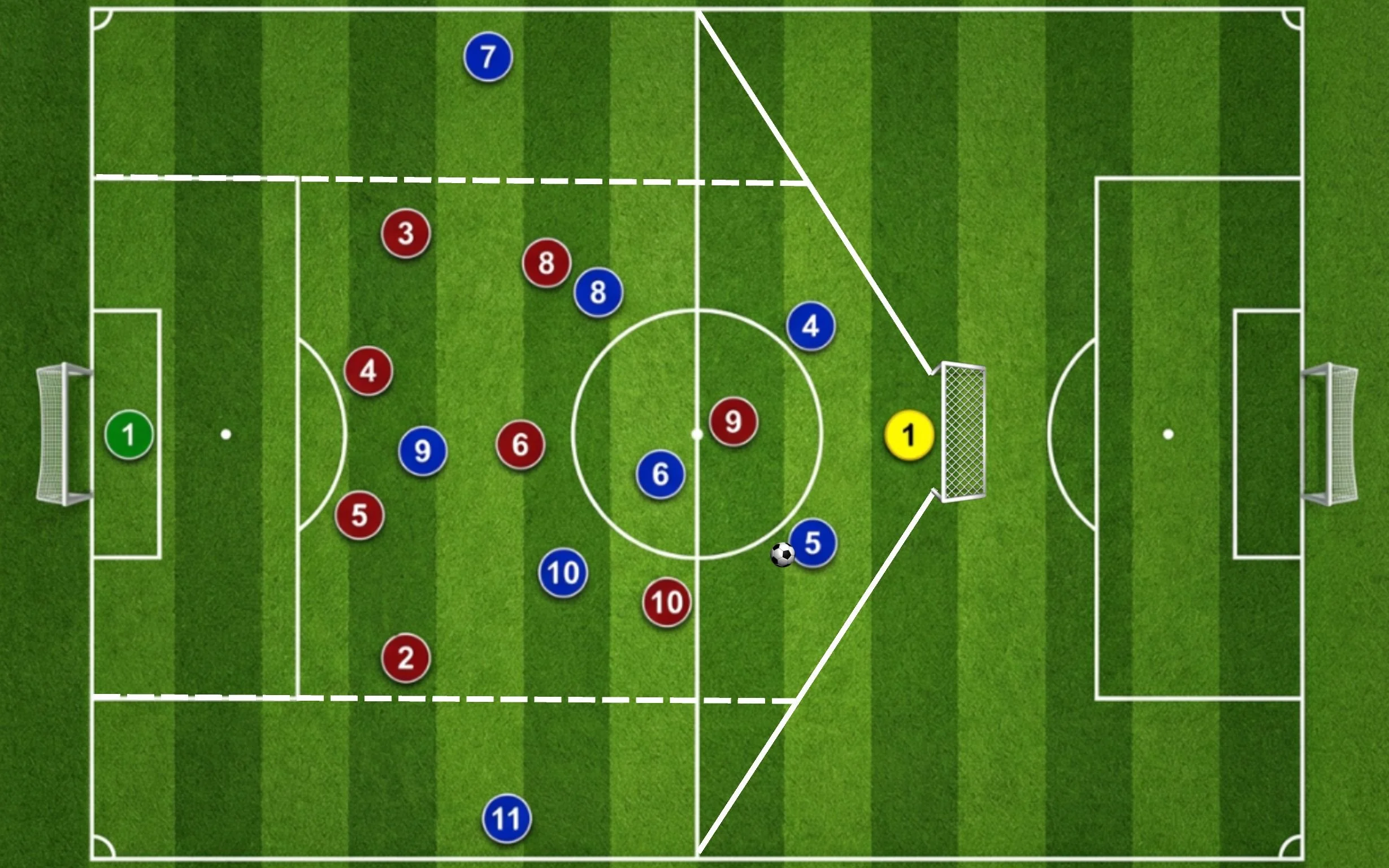
Pep Guardiola Qualitive Game Setup
Pep Guardiola Rondos: The Foundation of His Training Sessions
If there is one exercise that defines Pep Guardiola training, it is the rondo.
Rondos are small possession games where a group of players keep the ball away from defenders inside a tight area. They are used in almost every Guardiola training session, from Barcelona to Bayern Munich to Manchester City.
At first glance, a rondo looks like a simple passing drill. In reality, it is one of the most powerful teaching tools in football.
Guardiola uses rondos to train or maintain multiple skills at the same time:
quick passing under pressure
body orientation when receiving the ball
constant scanning before receiving
creating passing angles and triangles
finding the free player
This is why rondos are often called “the DNA of positional play.”
Instead of teaching players where to move through long tactical lectures, rondos allow players to learn the principles naturally through repetition.
Manchester City Rondo Pep Guardiola
Why Pep Guardiola Uses Rondos Every Day
Guardiola believes that the most important moments in football happen in tight spaces with little time to think.
Rondos recreate this exact situation.
Players must:
receive the ball under pressure
decide quickly where to pass
adjust their body position to see the field
move immediately after passing
Because the space is small, mistakes are punished quickly. This forces players to develop faster reactions and better awareness.
Over time, players begin to recognize patterns automatically. Passing angles, support positions, and pressing triggers all become instinctive.
This is one of the reasons Guardiola’s teams often look calm and comfortable in possession, even when opponents press aggressively.
Common Rondos Used in Pep Guardiola Training
Guardiola uses many variations of rondos depending on the objective of the session.
Some of the most common include:
5v2 Rondo
This is the classic rondo shape.
Five players keep possession against two defenders in the middle.
Coaching focus:
quick one touch passing
body shape when receiving
supporting angles
6v2 Rondo
This version adds an extra attacking player, making it easier to circulate the ball.
It allows players to practice moving defenders and switching the point of attack.
4v1 or 4v2 Tight Rondos
These are used in very small spaces to increase pressure.
They are particularly useful at the start of training sessions to sharpen players’ reactions and passing speed.
Guardiola Rule: Move After You Pass
One of the most important coaching points Guardiola repeats in rondos is simple:
“Pass and move.”
Players must constantly adjust their position to create new angles for the next pass.
Standing still makes it easy for defenders to intercept the ball.
Movement creates triangles and diamonds, which are essential structures in positional play.
What to Watch in a Guardiola Rondo
Pep Guardiola Rondo Detail
When watching a Pep Guardiola rondo, look closely at these details:
players scanning before receiving
body shape allowing them to see multiple passing options
constant communication and movement
defenders pressing aggressively
These small details are what transform a simple rondo into a high-level tactical exercise.
Why Rondos Translate Directly to Matches
The reason rondos are so effective is that they mirror real match situations.
During a game, players often receive the ball in crowded areas with opponents closing them down.
Rondos train players to:
stay calm under pressure
circulate possession quickly
find the free teammate
Because Guardiola teams practice these situations every day in training, they develop a natural ability to maintain possession and escape pressure during matches.
Pep Guardiola Positional Play: How He Teaches Players to Control Space
Rondos are only the beginning of Pep Guardiola training sessions. The next step is teaching players how to apply those passing principles across the entire pitch.
This is where Guardiola’s philosophy of positional play becomes most important.
Positional play is the idea that every player must occupy specific areas of the field in order to create passing options, stretch the opposition, and control possession.
Rather than allowing players to move randomly, Guardiola organizes the pitch into clear positional zones. These zones help players understand where they should stand, when they should move, and how they can support teammates in possession.
When players maintain correct spacing, the team naturally forms triangles and diamonds, which are the key structures that allow Guardiola teams to dominate possession.
Pep Guardiola Training 3v3 Plus 3
The Five Vertical Lanes Guardiola Teaches
One of the most famous ideas in Pep Guardiola training is dividing the pitch into five vertical lanes.
These lanes help players understand how to create width and passing angles during attacks.
The structure typically looks like this:
LaneTypical Player RoleLeft wingWingerLeft half spaceAttacking midfielderCentral laneStriker or pivotRight half spaceAttacking midfielderRight wingWinger
This structure achieves several important tactical goals.
Width stretches the defence
Wide players stay close to the touchline to force defenders to spread out.
Half spaces create dangerous passing angles
Attacking midfielders often operate between the wide and central lanes where they are difficult to mark.
Central players connect the team
The pivot or striker provides the link between defence and attack.
When these zones are occupied correctly, the team always has multiple passing options.
Guardiola’s Key Spacing Rule
One of Guardiola’s most famous coaching rules is:
No more than three players on the same horizontal line.
If too many players stand on the same line, passing angles disappear and defenders can block multiple options at once.
By staggering positions vertically and horizontally, Guardiola ensures his teams always have clear passing lanes and multiple angles to progress the ball.
This spacing is practiced constantly in training through positional games and small sided matches.
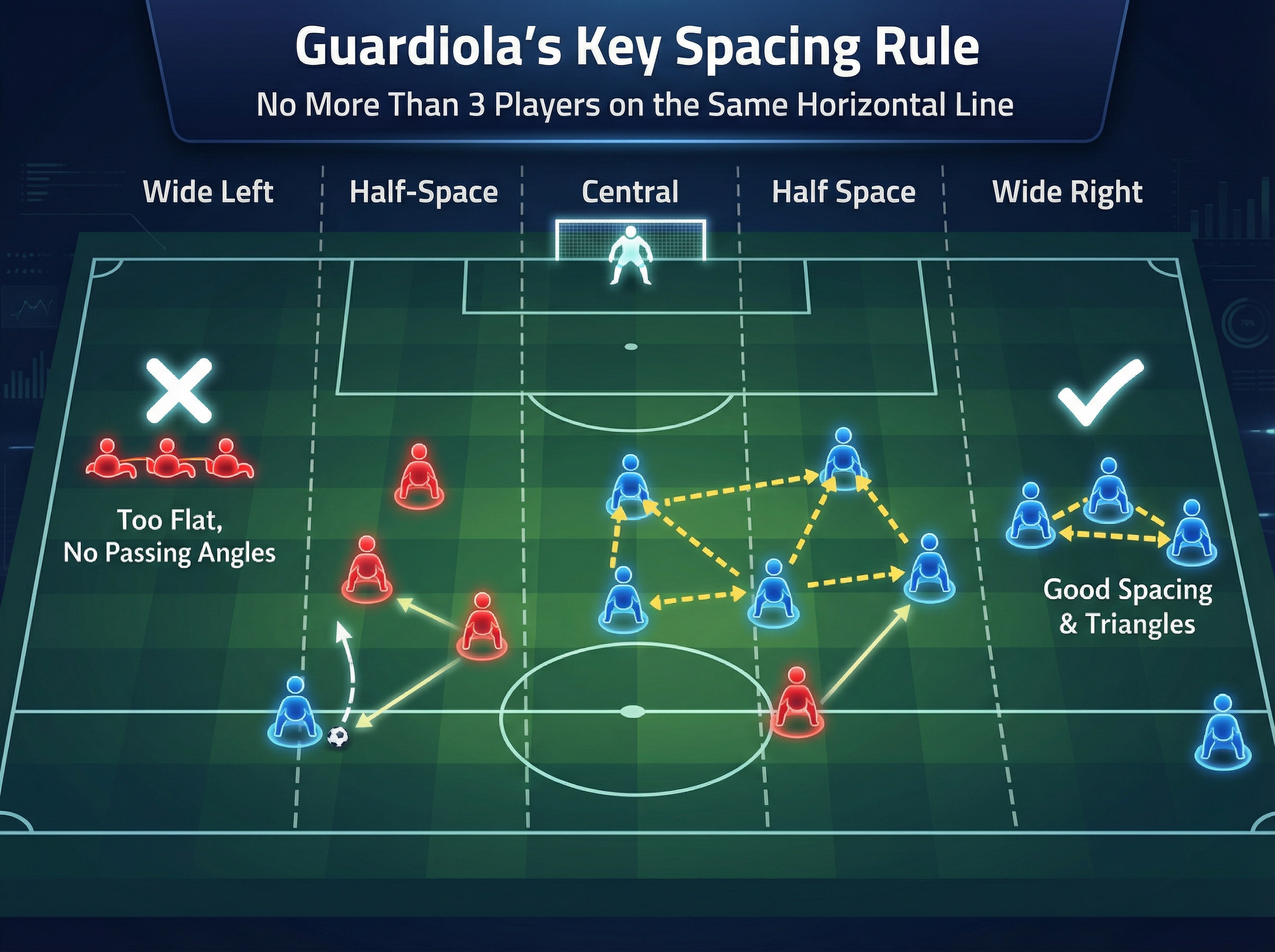
The Pep Guardiola 5 Lanes
Why Positional Play Makes Possession Easier
When players follow positional play principles, they don't need to improvise constantly.
The structure itself creates solutions.
Players automatically know:
where teammates should be positioned
where the next pass is likely to go
which spaces will open if the opponent presses
This is why Guardiola teams often look like they are playing faster than their opponents.
In reality, the players are simply making decisions more quickly because the structure of positional play gives them clear options.
Pep Guardiola Build Up Play Training
A major focus of Pep Guardiola training sessions is how the team builds attacks from the back. Guardiola believes the first phase of possession is where control of the game begins.
Instead of clearing the ball long, his teams are trained to play through pressure using positioning, quick passing, and constant movement. The goal is to create numerical superiority against the opponent’s press and progress the ball into midfield.
Pep Guardiola Attacking Combinations
Once Guardiola’s teams progress the ball through midfield, Pep Guardiola training sessions focus heavily on attacking combinations that break defensive lines.
Rather than relying on individual dribbling, Guardiola teaches players to use quick passing sequences and coordinated movement to create space around the penalty area.
One of the most important ideas he trains is the third man combination.
This occurs when a player passes the ball to a teammate, who immediately sets it off for a third player running into space. The third player often receives the ball facing forward, which allows the attack to accelerate toward goal.
Guardiola also encourages players to combine in the half spaces, the channels between the centre and wide areas of the pitch. These zones are difficult for defenders to control and often create the best opportunities to break defensive lines.
Common attacking movements practiced in Pep Guardiola training include:
third-man runs through midfield
quick one-two combinations around the box
wide overloads to isolate wingers
cutback passes from the byline
By repeating these patterns in training, Guardiola’s teams develop a shared understanding of movement and timing in the final third.
This is why Manchester City’s attacks often look fluid, synchronized, and extremely difficult to defend.
Pep Guardiola Counter Pressing Training
Another key part of Pep Guardiola training sessions is the team’s reaction immediately after losing possession.
Guardiola teaches his players to press aggressively the moment the ball is lost. The objective is simple: win the ball back as quickly as possible before the opponent can launch a counterattack.
This idea is often referred to as counter pressing.
Instead of retreating into a defensive shape, Guardiola’s teams try to surround the ball and close down passing options within seconds. Because his teams attack with good spacing and compact distances between players, they are usually well positioned to press immediately.
In training, Guardiola frequently uses small sided games and positional exercises that include rules such as:
immediate pressure after losing the ball
limited time to win possession back
compact team shape around the ball
These exercises teach players to react instinctively when possession changes.
The result is that Guardiola teams often regain the ball quickly and maintain constant pressure on their opponents. Counter pressing not only stops counterattacks, but also creates new attacking opportunities close to the opponent’s goal.
This ability to lose the ball and recover it almost instantly has become one of the defining characteristics of Pep Guardiola training and match play.
Pep Guardiola Demands Counter Pressing Actions
Conclusion: Learning From Pep Guardiola Training
Pep Guardiola has transformed modern football not only through tactics, but through the way he trains players every day. His sessions are built around positional play, intelligent spacing, quick passing, and immediate counter pressing.
From rondos and positional games to build-up patterns and attacking combinations, every exercise in Pep Guardiola training is designed to help players understand space and make faster, better decisions on the ball.
These principles are what allow Guardiola’s teams to dominate possession, break defensive lines, and control matches.
If you want to study these ideas in more detail, you can explore more Pep Guardiola training sessions, drills, and tactical exercises throughout this site on our member area or by downloading the Pep Guardiola training pack below. Many of the sessions break down the same positional play concepts, rondos, and combination patterns used by Guardiola’s teams so they can be applied on the training pitch.
By studying and applying these ideas, coaches can begin to introduce the same possession principles and positional play concepts that define Pep Guardiola training.
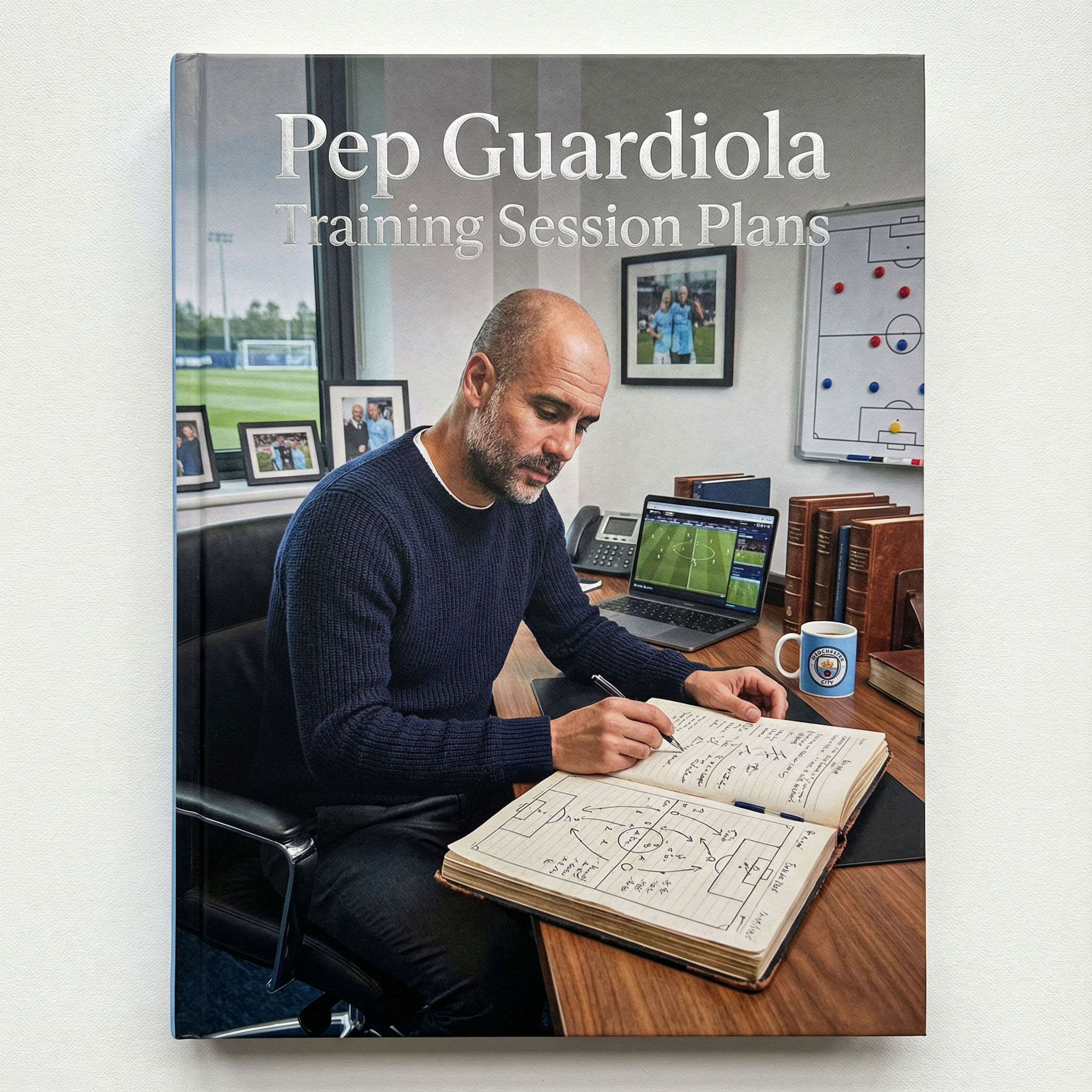
Download world-class training sessions inspired by Pep Guardiola — one of football’s greatest minds.
Get real training footage, animated drills, a detailed coaching eBook and bonus content that is designed to transform your sessions.
🔥 Instant access (One time payment).
✅ Includes Over 100 Training Practices
✅Includes training sessions built for all levels.
✅ 100% secure checkout via PayPal & Stripe.
This is a resource you’ll use over and over. 👇 See an example below